Loading


Journal of Cancer Biology
ISSN: 2692-7896


Kartoosh Heydari
Director, Flow Cytometry Core Facility Cancer Research Laboratory
University of California, USA
Featured Article
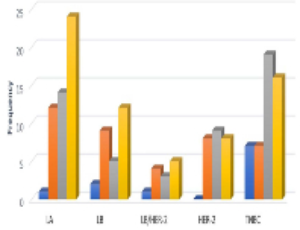
Cyclin A2 and Ki-67 proliferation markers could be used to identify tumors with poor prognosis in African American women with breast cancer
Featured Article
PAK1 and PAK4 as therapeutic targets for Ewing sarcoma: a commentary

Featured Article
Breaking malignant nuclei as a non-mitotic mechanism of taxol/paclitaxel

About this Journal
Journal of Cancer Biology is an international peer-reviewed, open access, interdisciplinary journal publishing high quality papers by biomedical researchers across the globe in the field of cancer science, but not limited to, cancer biology, clinical cancer research, and cancer prevention. The journal publishes original articles and editorials, letters to the editor, review articles, case reports and short communication describing research and perspectives relevant to cancer researchers.
Articles
Exercise and its influence on the tumor microenvironment — the role of muscle-cancer cross talk
Exercise is increasingly being recognized as an important part of cancer treatment, as it has been shown to alleviate treatment- and disease-related side effects and improve quality of life of patients with cancer. Furthermore, exercise has been linked to a reduced risk of cancer recurrence, particularly in cases of breast and colorectal cancer. In recent years, the question has come to the forefront: “How?” does exercise influences cancer survival, and with it the interest in the underlying physiological mechanisms.
Wearable device for detection and elimination of cancer cells at inception: birth of a new era
Despite major advances in molecular oncology and cancer therapeutics, early detection remains a critical limitation for many malignancies. Current screening approaches rely largely on anatomical or morphological changes, highlighting a persistent gap between modern biological understanding of cancer and its clinical application. This article examines the evolution of cancer biology and explores why these advances have not yet translated into effective early detection strategies.
Molecular subtypes of breast cancer in Nigeria: clinicopathological insights from immunohistochemical profiling
Breast cancer remains the most frequently diagnosed malignancy among women worldwide and a leading cause of cancer-related mortality. Its burden continues to rise in low- and middle-income countries, where late presentation, limited diagnostic capacity, and uneven access to targeted therapies contribute substantially to poor outcomes.
Preoperative radiation boost in early-stage breast cancer: a focused report
In breast-conserving therapy, whole-breast radiotherapy (WBRT) followed by a postoperative tumor bed boost is the standard approach for patients at increased risk of local recurrence [1–6]. However, postoperative boost delivery is limited by challenges in tumor bed delineation after surgery, particularly in the setting of oncoplastic reconstruction, and may prolong overall locoregional treatment time. Historical concerns regarding wound healing have limited the use of preoperative breast radiotherapy, though these concerns largely stem from experiences with whole-breast irradiation rather than limited-volume boost dosing [7,8].
Beyond a binary RTK-RAS biomarker: context-aware precision oncology in early-onset colorectal cancer
Early-onset colorectal cancer (EOCRC) is increasing worldwide and represents a biologically and clinically heterogeneous disease that requires precision approaches extending beyond conventional single-gene biomarkers. Recent analyses of receptor tyrosine kinase-RAS (RTK-RAS) pathway alterations demonstrate that their clinical significance is strongly dependent on age at diagnosis, ancestry, and treatment exposure. In particular, RTK-RAS alterations have been associated with unfavorable survival in untreated early-onset non-Hispanic White colorectal cancer, while an opposite association has been observed in FOLFOX-treated late-onset disease.
PAK1 and PAK4 as therapeutic targets for Ewing sarcoma: a commentary
Ewing sarcoma (ES) is an aggressive pediatric bone tumor that is prone to metastasis. Due to low five-year survival rates and limited therapeutic options for metastatic disease, there is a dire clinical need for improved ES treatments. Targeting p21-activated kinases (PAKs) may be key. PAK1 and PAK4 are associated with aggressive ES and poor patient outcomes, although their molecular mechanisms remain largely uncharacterized in this disease.
Breaking malignant nuclei as a non-mitotic mechanism of taxol/paclitaxel
Discovered in a large-scale screening of natural plant chemicals, Taxol/paclitaxel and the taxane family of compounds are surprisingly successful anti-cancer drugs, used in treatment of the majority of solid tumors, and especially suitable for metastatic and recurrent cancer. Paclitaxel is often used in combination with platinum agents and is administrated in a dose dense regimen to treat recurrent cancer.
Immuno-oncologic care during COVID-19: Challenges and opportunities for improving clinical care and investigation
Cancer care has been greatly impacted during the COVID-19 pandemic. The number of cases and deaths caused by the COVID-19 pandemic continues to escalate throughout the United States and the world. Worldwide, over 150 million people have been diagnosed with the coronavirus and more than 3 million have died.
Chromatin dynamics: Nucleosome occupancy and sensitivity as determinants of gene expression and cell fate
The nucleosome, consisting of ~150bp of DNA wrapped around a core histone octamer, is a regulator of nuclear events that contributes to gene expression and cell fate. Nucleosome organization at promoters and their associated remodeling events are important regulators of access to the genome. Occupancy alone, however, is not the only nucleosomal characteristic that plays a role in genome regulation. Nucleosomes at the transcription start sites (TSSs) of genes show differential sensitivity to micrococcal nuclease (MNase) and this differential sensitivity is linked to transcription and regulatory factor binding events.
Challenges in the humanized mouse model for cancer: A commentary
The complexity of the tumor microenvironment has been a challenge for understanding the mechanisms of therapy resistance. The development of improved animal models that closely mimic human disease is key for understanding and treating diseases. Recently, a new humanized mouse model has been developed that enables the study of human immune cells in tumor host-cell interactions
Changing the landscape of non-small cell lung cancer disparities
In the United States, lung and bronchus cancers are the second most common types of cancer and are responsible for the largest number of deaths from cancer, with African Americans suffering disproportionately from lung and bronchus cancers. This disparity likely results from a complex interplay among social, psycho-social, lifestyle, environmental, health system, and biological determinants of health.
Precision medicine and immunotherapy advances transforming colorectal cancer treatment
New stool DNA panels and blood-based assays offer non-invasive options for early CRC detection, though require further validation. Immuno- and targeted therapies matched to tumor molecular profiles have transformed metastatic CRC treatment. Pembrolizumab elicits durable responses in mismatch repair-deficient tumors, and anti-EGFR antibodies cetuximab/panitumumab improve outcomes for left-sided RAS/RAF wild-type CRC. Larotrectinib and entrectinib are highly active in NTRK fusion-positive CRC. Research focusing on new immunotherapies, leveraging the microbiome, and combining multi-omics data to enable precision medicine holds promise. Disparities across groups remain a challenge.
Cyclin A2 and Ki-67 proliferation markers could be used to identify tumors with poor prognosis in African American women with breast cancer
Eight protein biomarkers (ER, PR, HER2, Cyclin A2, Cytokeratin 5, Vimentin, Bcl2, and Ki-67) were evaluated using tissue microarrays (TMAs) and immunohistochemistry (IHC). The IHC results from TMAs were analyzed by both supervised and unsupervised clustering methods. The predictive clusters for the supervised and unsupervised methods were compared for agreement with the empirical classification. Kappa values were used to determine the overall percent correct clusters and agreement between specific clusters.
Tumor biomarkers from discovery to clinical practice
A tumor marker is a chemical that acts as a tumor indication. Tumor biomarkers are undefined in origin, but they indicate the existence of a certain tumor. The detection of a specific tumor is aided by an increase or decrease in the concentration of marker concentrations. Gene expression arrays, proteomic technologies, and high-throughput sequencing are some of the current methods for detecting cancer.
Breaking malignant nuclei as a non-mitotic mechanism of taxol/paclitaxel
Discovered in a large-scale screening of natural plant chemicals, Taxol/paclitaxel and the taxane family of compounds are surprisingly successful anti-cancer drugs, used in treatment of the majority of solid tumors, and especially suitable for metastatic and recurrent cancer. Paclitaxel is often used in combination with platinum agents and is administrated in a dose dense regimen to treat recurrent cancer.
Immuno-oncologic care during COVID-19: Challenges and opportunities for improving clinical care and investigation
Cancer care has been greatly impacted during the COVID-19 pandemic. The number of cases and deaths caused by the COVID-19 pandemic continues to escalate throughout the United States and the world. Worldwide, over 150 million people have been diagnosed with the coronavirus and more than 3 million have died.
Can electronic-cigarette vaping cause cancer?
The relative safety of E-cigarette (E-cig) has been an emerging topic in the public domain as well as the medical and scientific communities as vaping associated health problems arose. While there were significant amounts of intelligent discussions and opinions on the benefits and deleterious effects of E-cig vaping, there is a lack of solid evidence of the fundamental biochemical and biological effects of E-cig aerosol and nicotine.
Precision medicine and immunotherapy advances transforming colorectal cancer treatment
New stool DNA panels and blood-based assays offer non-invasive options for early CRC detection, though require further validation. Immuno- and targeted therapies matched to tumor molecular profiles have transformed metastatic CRC treatment. Pembrolizumab elicits durable responses in mismatch repair-deficient tumors, and anti-EGFR antibodies cetuximab/panitumumab improve outcomes for left-sided RAS/RAF wild-type CRC. Larotrectinib and entrectinib are highly active in NTRK fusion-positive CRC. Research focusing on new immunotherapies, leveraging the microbiome, and combining multi-omics data to enable precision medicine holds promise. Disparities across groups remain a challenge.
Tumor biomarkers from discovery to clinical practice
A tumor marker is a chemical that acts as a tumor indication. Tumor biomarkers are undefined in origin, but they indicate the existence of a certain tumor. The detection of a specific tumor is aided by an increase or decrease in the concentration of marker concentrations. Gene expression arrays, proteomic technologies, and high-throughput sequencing are some of the current methods for detecting cancer.
Breaking malignant nuclei as a non-mitotic mechanism of taxol/paclitaxel
Discovered in a large-scale screening of natural plant chemicals, Taxol/paclitaxel and the taxane family of compounds are surprisingly successful anti-cancer drugs, used in treatment of the majority of solid tumors, and especially suitable for metastatic and recurrent cancer. Paclitaxel is often used in combination with platinum agents and is administrated in a dose dense regimen to treat recurrent cancer.
Immuno-oncologic care during COVID-19: Challenges and opportunities for improving clinical care and investigation
Cancer care has been greatly impacted during the COVID-19 pandemic. The number of cases and deaths caused by the COVID-19 pandemic continues to escalate throughout the United States and the world. Worldwide, over 150 million people have been diagnosed with the coronavirus and more than 3 million have died.
Can electronic-cigarette vaping cause cancer?
The relative safety of E-cigarette (E-cig) has been an emerging topic in the public domain as well as the medical and scientific communities as vaping associated health problems arose. While there were significant amounts of intelligent discussions and opinions on the benefits and deleterious effects of E-cig vaping, there is a lack of solid evidence of the fundamental biochemical and biological effects of E-cig aerosol and nicotine.
Chromatin dynamics: Nucleosome occupancy and sensitivity as determinants of gene expression and cell fate
The nucleosome, consisting of ~150bp of DNA wrapped around a core histone octamer, is a regulator of nuclear events that contributes to gene expression and cell fate. Nucleosome organization at promoters and their associated remodeling events are important regulators of access to the genome. Occupancy alone, however, is not the only nucleosomal characteristic that plays a role in genome regulation. Nucleosomes at the transcription start sites (TSSs) of genes show differential sensitivity to micrococcal nuclease (MNase) and this differential sensitivity is linked to transcription and regulatory factor binding events.